Peptides
Hemi Pharma Peptides
Hemi Pharma produces eleven peptides covering three distinct subcategories: recovery and tissue repair peptides, growth factor peptides and GLP-1 receptor agonists used for metabolic and weight management purposes. All Hemi Pharma peptides are produced as lyophilised powder sealed in glass vials under nitrogen. This production format preserves structural integrity during storage and transport in a way that liquid peptide solutions cannot match.
Peptides are short chains of amino acids linked by peptide bonds. They are not anabolic steroids and do not work through androgen receptor pathways. They act by binding to specific receptors and triggering localised biological responses. BPC-157, for example, binds to growth hormone secretagogue receptors and activates pathways associated with tissue repair and angiogenesis. TB-500 modulates actin, a structural protein involved in cell migration and wound healing. IGF-1 variants bind to insulin-like growth factor receptors and influence cellular growth and repair. GLP-1 receptor agonists such as Semaglutide, Retatrutide and Tirzepatide act on receptors in the pancreas, brain and gastrointestinal tract to regulate appetite, insulin secretion and metabolic rate.
Every Hemi Pharma peptide is independently batch-tested before reaching the UK market. The BPC-157 5mg certificate published on the Hemi Pharma lab results page returned 5.01mg per vial with 99.382% purity. The HGH certificate returned 12.27 IU per vial with 98.596% purity. Both are independently verifiable at janoshik.com using the unique code on each document.



How to Reconstitute and Store Hemi Pharma Peptides
Hemi Pharma peptides arrive as lyophilised powder in sealed glass vials. Reconstitution is required before use. Draw bacteriostatic water into a syringe and inject it slowly down the side of the vial wall rather than directly onto the powder. Swirl the vial gently until the powder has fully dissolved. Do not shake, as shaking can damage the peptide structure. The volume of bacteriostatic water used determines the concentration per unit of measurement.
Once reconstituted, Hemi Pharma peptides should be stored in the refrigerator at 2 to 8 degrees Celsius and used within 21 to 28 days. Unconstituted vials stored in the freezer will maintain stability significantly longer. Bacteriostatic water must be used for reconstitution rather than sterile water when a vial is intended for use over multiple doses, as bacteriostatic water contains 0.9% benzyl alcohol which inhibits microbial growth and extends the usable life of the reconstituted solution.
Peptides are typically administered subcutaneously, injected into a fold of skin using a 29 to 31 gauge insulin syringe. The abdomen, outer thigh and lower back are the most commonly used administration sites for subcutaneous injection due to the accessible subcutaneous fat layer in these areas.
What You Will Need Alongside Peptides
Recovery peptides such as BPC-157 and TB-500 are commonly used alongside compounds from the Hemi Pharma injectable steroid range to support tissue recovery during and after cycles. GLP-1 receptor agonists including Semaglutide 5mg, Retatrutide 5mg and Tirzepatide 5mg are typically used as standalone protocols rather than alongside anabolic compounds. Users completing a steroid cycle requiring post cycle therapy will find the full Hemi Pharma PCT range available separately.
Hemi Pharma Peptides Frequently Asked Questions
What peptides does Hemi Pharma produce?
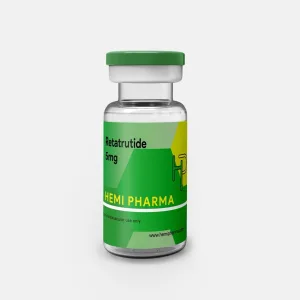
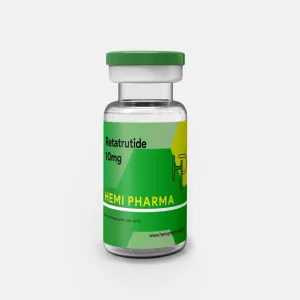
Hemi Pharma produces eleven peptides: BPC-157, TB-500 2mg, TB-500 10mg, IGF1-LR3, IGF DES (1-3), MGF (Mechano Growth Factor), MT2 (Melanotan 2), Semaglutide 5mg, Retatrutide 5mg, Retatrutide 10mg and Tirzepatide 5mg. All are produced as lyophilised powder sealed in glass vials.
What is the difference between BPC-157 and TB-500?
BPC-157 (Body Protection Compound 157) is a synthetic pentadecapeptide derived from a protein found in gastric juice. It is primarily associated with tendon, ligament and gut tissue repair, and acts partly through the nitric oxide system and growth hormone receptor pathways. TB-500 is a synthetic version of Thymosin Beta-4, a naturally occurring peptide that modulates actin and plays a role in cell migration, angiogenesis and the repair of damaged tissue. Both are used for recovery purposes but act through different mechanisms. They are frequently used together for this reason.
What are the Hemi Pharma GLP-1 peptides used for?
Semaglutide, Retatrutide and Tirzepatide are GLP-1 receptor agonists. They act on receptors in the pancreas, brain and gastrointestinal tract to reduce appetite, slow gastric emptying and improve insulin sensitivity. They are used for metabolic support and body composition management. They are not anabolic compounds and do not require post cycle therapy.
Do Hemi Pharma peptides need to be refrigerated?
Unconstituted lyophilised peptide vials should be stored in the refrigerator at 2 to 8 degrees Celsius or in the freezer for long-term storage. Once reconstituted with bacteriostatic water, store in the refrigerator and use within 21 to 28 days. Do not freeze reconstituted peptide solutions.
What is the purity of Hemi Pharma BPC-157?
The Hemi Pharma BPC-157 5mg batch test certificate published on the lab results page returned a measured result of 5.01mg per vial with 99.382% purity. The certificate is independently verifiable at janoshik.com using the unique code printed on the document.
What is the difference between IGF1-LR3 and IGF DES (1-3)?
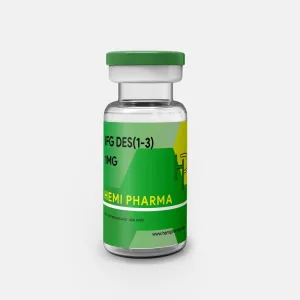
Both are synthetic variants of Insulin-like Growth Factor 1. IGF1-LR3 has a modified arginine substitution and a 13 amino acid extension that significantly extends its half-life compared to native IGF-1, allowing it to circulate systemically and bind to receptors throughout the body. IGF DES (1-3) lacks the first three amino acids of native IGF-1, which increases its binding affinity to the IGF-1 receptor and makes it more potent locally at the injection site. IGF1-LR3 is used for systemic effect; IGF DES is used for localised effect at the site of administration.
What is MT2 (Melanotan 2)?
Melanotan 2 is a synthetic analogue of alpha-melanocyte-stimulating hormone. It acts on melanocortin receptors and is associated with increased melanin production, which darkens skin pigmentation. It is not an anabolic steroid and does not act through androgen receptor pathways.
Showing all 12 results